
Na To Karvan Ki Talash Hai: How ‘Dhurandhar’ brought back an old classic |
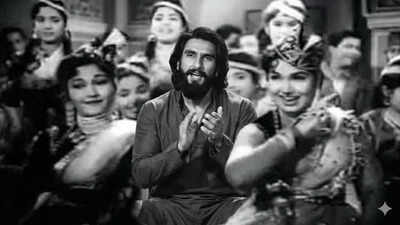
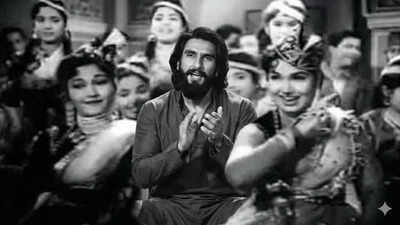
It is tempting, and deeply fashionable, to imagine the present generation as one that lives only on surfaces. Hooks without histories and remixes without memory. A culture that borrows lines and forgets where they came from. The path to Barsaat Ki Raat in 2025 does not begin with liner notes or Sunday radio programmes. It begins improbably with a burst of noise and motion in Dhurandhar. A familiar line, sharpened by a new arrangement, placed against speed, spectacle, and the restless energy of Ranveer Singh. The qawwali does not re-enter public consciousness as a museum piece; it arrives with impressive impact.
That’s precisely why it works: we do not approach culture chronologically but functionally. When a lyric lands with clarity and refusal, when it speaks of walking away from caravans, from crowds, from the performance of togetherness, it feels contemporary even if it was written decades ago. The idea that young listeners prefer versions to originals misses something essential. The version is not the destination. It is the invitation. The remix does not replace the old work; it tests it. It asks whether the core can survive acceleration, compression, repetition, and algorithmic exposure. Sahir Ludhianvi survives this test not because of nostalgia, but because his lines were never decorative to begin with. They were arguments; quiet yet stubborn arguments against the tyranny of numbers and the seduction of belonging. When those words reappear in a compressed, high-energy loop, they do not feel diminished, they reappear with meaning. Once the line begins circulating, something predictable happens. Viewers search and longer. They discover that the voice they heard in a reel once took thirteen unhurried minutes to unfold. That the philosophy was always patient, never in a hurry to convince. The remix opens the door; the original teaches you how to sit still inside the room.This is not new behaviour. Every generation has arrived at meaning from the side door. Cinema versus books, covers rather than first recordings, quotations before complete texts. What may feel like dilution from a distance often turns out to be transmission and distribution.The mistake is to assume that reverence must come first: it rarely does. Attachment precedes respect and emotion precedes scholarship. Which is why the persistence of old work is never about age. It is about whether something remains combustible: something that can still catch, even when struck in unfamiliar ways. Some ideas endure precisely because they are indifferent to the containers they pass through.This qawwali then does not survive because it is protected. It survives because it travels And, in a time, obsessed with velocity, that may be the most contemporary quality of all.