India-Bangladesh ties sour: US dials Yunus; Dhaka suspends visa services – 10 key points | India News
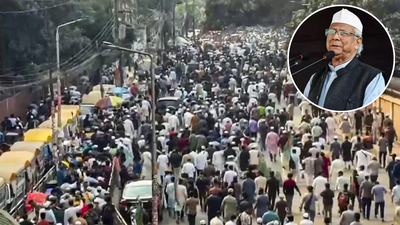
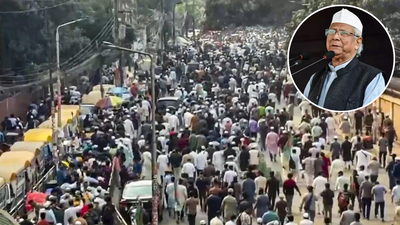
Ties between India and Bangladesh have hit another roadblock after the killing of youth leader Sharif Osman Hadi in Dhaka sparked anti-India protests. Hadi, a prominent figure in last year’s July uprising in Bangladesh, was killed amid rising political tensions, triggering widespread unrest. Bangladesh government suspended visa services in India following protests outside Bangladeshi missions. India, meanwhile, has raised concerns over the safety of minorities, the security of diplomatic missions, and what it describes as misleading narratives emerging from Bangladesh.
10 key points on the recent Bangladesh unrest:
US dials Yunus to discuss ‘recent events’Muhammad Yunus held a half-hour phone conversation with US Special Envoy for South and Central Asia Sergio Gor. Yunus used the call to reiterate his pledge to hold general elections on February 12, saying the country was “eagerly waiting” to reclaim voting rights allegedly denied under the previous regime. Sharing the details of the conversation, US Bureau of South and Central Asian Affairs said during the call Gor discussed the “recent events” in Bangladesh.“Today, Special Envoy for SCA Ambassador Sergio Gor held a productive call with Chief Advisor Yunus @ChiefAdviserGoB to discuss recent events in Bangladesh and shared US interests to advance prosperity through trade,” US Bureau of South and Central Asian Affairs wrote on X.Dhaka suspends visa servicesAmid mounting protests, Bangladesh suspended visa services at its High Commission in New Delhi and missions in Tripura and Siliguri, citing unavoidable circumstances. The decision followed demonstrations outside Bangladeshi diplomatic premises, while India had earlier suspended visa services at its Chittagong mission after protesters attempted to storm the compound.Election promise amid warnings of sabotageYunus insisted the interim government remained committed to delivering a “free, fair and peaceful” election within roughly 50 days, describing the vote as an opportunity to restore democratic legitimacy. At the same time, he warned that supporters of the ousted Awami League regime were allegedly spending millions to disrupt the electoral process, with a fugitive leader inciting violence from abroad.Inqilab Moncho threatens mass movementInqilab Moncho, the platform Hadi led, issued a 24-hour ultimatum demanding justice, warning that failure to act would trigger a mass movement to oust the interim government. The group demanded a speedy trial tribunal, involvement of international agencies like the FBI and Scotland Yard, and accountability from home and law advisers. Its leaders accused intelligence agencies of failing to identify perpetrators and alleged Awami collaborators were embedded within security structures.Another youth leader shotConcerns deepened after another leader of the student-led uprising, Motaleb Shikder, was shot in the head in Khulna days after Hadi’s death. Police launched a manhunt but said they remained unclear about the motive or perpetrators. The attack reinforced fears that a coordinated campaign of violence was targeting figures linked to last year’s protests. With multiple leaders injured or killed, questions grew over whether the interim government could guarantee safety during the election period. India raises minority and security concernsEarlier on Wednesday, India had summoned Bangladesh’s envoy and expressed strong concern over extremist elements threatening diplomatic missions and minority communities. On December 21, the ministry of external affairs rejected what it called false narratives suggesting security breaches at Bangladesh’s High Commission in Delhi, insisting protests were brief and controlled. New Delhi urged Dhaka to bring perpetrators of the lynching of Hindu man Dipu Chandra Das to justice and said it remained vigilant over minority safety. Bangladesh to scale back diplomatic presence in India?Bangladesh’s interim government said that it may review the scale of its diplomatic presence in New Delhi if the situation continues to worsen. Foreign affairs adviser M Touhid Hossain made the remarks hours after India dismissed as “misleading propaganda” Bangladeshi media reports on protests outside the Bangladesh high commission in New Delhi.Also read: Bangladesh to scale back diplomatic presence in India? What its FM Touhid Hossain said“Regarding the Indian press note, we completely reject it, entirely reject it. The issue has been presented as if it were very simple, whereas in reality it is not,” state-run news agency Bangladesh Sangbad Sangstha (BSS) quoted Hossain as saying at the media briefing.Sheikh Hasina lashes out at YunusFrom exile in India, Sheikh Hasina blamed Yunus entirely for Bangladesh’s instability, accusing the interim government of empowering extremists, failing to protect minorities, and undermining relations with India. She warned that lawlessness under Yunus had damaged Bangladesh’s credibility and endangered regional stability. Hasina claimed radical groups were exploiting Yunus to reshape foreign policy without a mandate, insisting that ties with India would normalise only after legitimate governance was restored. Her remarks added a powerful external voice to an already volatile political landscape.How the unrest started?The assassination of Sharif Osman Hadi, shot at close range in Dhaka’s Bijoynagar area and later dying in Singapore, became the catalyst for widespread protests. A key figure in the July Uprising that toppled Sheikh Hasina, Hadi’s death sparked anger among supporters who accused the state of inaction. Demonstrations erupted across Dhaka, with calls for accountability growing louder as Yunus declared a national day of mourning. The killing also fuelled fears that political violence was returning just weeks before a pivotal election.Protesters target Bangladeshi media outletsThe unrest soon spread to Bangladesh’s media houses, with violent mobs attacking the offices of Prothom Alo, The Daily Star, and other outlets in Dhaka. Prothom Alo was forced to halt print publication for the first time in its 27-year history. Yunus condemned the attacks, calling them assaults on truth and press freedom, and pledged full justice. Authorities later said 31 suspects had been identified through video footage, with several arrests made, but the damage to Bangladesh’s democratic image was already significant.(With inputs from agencies)