

Why were Pompeii residents wearing heavy wool during August eruption? Researchers reveal new evidence | World News
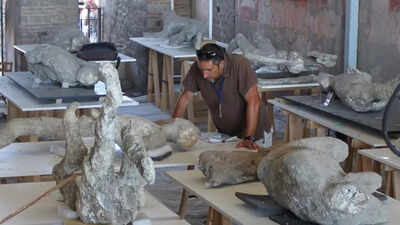
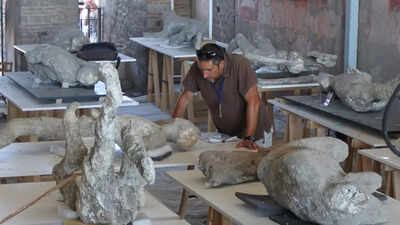
Pompeii has always felt strangely frozen in time. Streets halted mid-step. Meals left on tables. Bodies caught in their last movements. Mount Vesuvius erupted in late August, in the sticky heat of a southern Italian summer in CE 79. Now, a new study is nudging that certainty sideways. Researchers examining the plaster casts of victims say something doesn’t quite fit. Several people were wearing thick wool clothing and heavy layers in the month of August. It seems odd and it’s reopened a long-running debate about the actual date of the eruption and what the weather might really have been like on Pompeii’s final day.
Pompeii victims wool clothing reveals heavy layers in late summer
The new research comes from the ÁTROPOS group at the University of Valencia. The team studied fourteen plaster casts recovered from the Porta Nola necropolis in Pompeii. These casts famously preserve the shapes of bodies and sometimes, the faint impressions of clothing that vanished long ago. Many victims appear to have been wearing a wool tunic covered by a wool cloak unlike light fabric. In four of the casts, textile impressions were clear enough to analyse the weave itself. Experts say the threads suggest thick, weighty garments.Wool was common in the Roman world. It was affordable and widely used. That part isn’t surprising but wearing two thick layers in southern Italy in late August raises eyebrows.
What does Pompeii eruption clothing hints
For centuries, the eruption date of Mount Vesuvius has largely rested on the writings of Pliny the Younger. In letters describing the disaster, he places the eruption in late August. Many historians have accepted that date but archaeology has complicated things. Autumn fruits have reportedly been found in Pompeii’s ruins like pomegranates, walnuts and even evidence of wine already fermenting beyond what might be expected in high summer. On the other side, strangely some houses contained lit portable kind heaters and other small heating devices.The heavy wool garments might not reflect cold weather at all. Instead, they could have been a desperate response to the eruption itself. When Mount Vesuvius exploded in CE 79, it didn’t unleash a single blast. It was a prolonged catastrophe with hours of falling ash, toxic gases and full of darkness in the middle of the day.If ash began falling early, residents may have layered up instinctively. Grabbing what was nearby. Pulling cloaks tight as the air grew harsher. That would explain why people inside buildings and those out in open streets appear dressed in similar ways.
Final moments of victims
Pompeii wasn’t destroyed instantly. The eruption unfolded over many hours. Some residents fled while others stayed. The plaster casts themselves are haunting. One of the most recognisable is a male victim whose final posture was preserved in ash, later filled with plaster. Now, researchers are reading them almost like forensic evidence. It’s striking how something as ordinary as clothing can challenge a date written nearly two thousand years ago.