French nationalist beaten to death: Meet antifa activist-turned-MP Raphael Arnault at the heart of France’s political scandal | World News
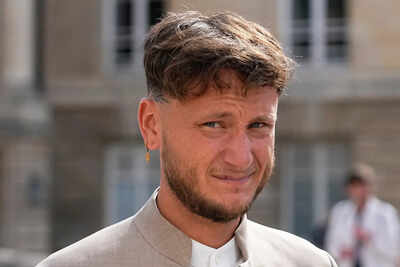
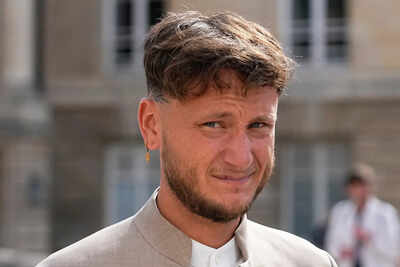
A fatal street clash in Lyon has triggered one of the most explosive political controversies in France in recent years, placing a first-term lawmaker at the centre of national scrutiny.According to a Reuters report, a 23-year-old nationalist activist, Quentin Deranque, died after being brutally beaten during a confrontation between rival far-left and far-right groups earlier this month. Prosecutors opened a homicide investigation and police detained multiple suspects in connection with the assault.What transformed the incident into a political crisis was the trail leading into Parliament. Reuters reported that among those detained were individuals linked to the parliamentary office of Raphaël Arnault, a far-left MP from La France Insoumise. French media later identified one of them as a sitting parliamentary assistant and another as a former intern, with investigators examining whether one participated directly in the assault and whether another helped suspects evade police.Arnault himself is not accused of involvement in the violence. He has stated that he initiated procedures to dismiss a staff member following the arrest and said he would cooperate fully with investigators.
Who Raphaël Arnault is
The controversy has drawn intense attention because Arnault is not a conventional political figure. His rise reflects a broader shift in European politics in which militant grassroots activism increasingly intersects with electoral institutions.Before entering Parliament, Arnault was best known as a leader of a militant anti-fascist network based in Lyon. French authorities dissolved the group in 2023, citing risks to public order and repeated involvement in violent confrontations with far-right activists. Arnault also had prior convictions linked to protest-related violence, which became a major issue during his election campaign.This activist background is precisely why the Deranque case has become politically explosive. Critics argue that it highlights the blurred boundary between militant movements and institutional politics, while supporters maintain that anti-fascist activism is a legitimate political response to extremism.
How he came to power
Arnault’s rise to Parliament was not the result of a gradual climb through party ranks but a consequence of a dramatic political moment in France.In 2024, French president Emmanuel Macron dissolved the National Assembly after his party suffered heavy losses in European elections. The sudden vote risked splitting the left-wing electorate and benefiting the far right.To prevent that outcome, multiple left-wing parties formed a broad electoral alliance known as the New Popular Front. Under this arrangement, constituencies were divided among alliance partners to ensure only one left-wing candidate contested each seat.Arnault was nominated by La France Insoumise in a constituency allocated to the party under this seat-sharing agreement. Because the entire left coalition backed him, he benefited from unified tactical voting in France’s two-round electoral system and won the seat despite controversy over his activist past.His election illustrated a wider trend across Europe, where political legitimacy increasingly flows not from traditional party hierarchies but from mobilisation capacity in grassroots movements.
Why the case is politically explosive
The Deranque killing has become a national flashpoint because it intersects with several deep tensions in French society.First, Lyon has long been a centre of ideological street clashes between anti-fascist networks and far-right nationalist groups. The city’s history of recurring confrontations gives the incident broader symbolic significance.Second, the arrests of individuals linked to a sitting MP’s office have intensified debate about whether militant activism can coexist with democratic institutions. Opponents argue that Arnault’s continued association with radical networks and his hiring choices reflect poor judgement, while allies say he is being targeted for political reasons.Third, the controversy is unfolding in an already polarised political climate following the 2024 snap elections, amplifying its national impact.
The bigger picture
Arnault’s political journey and the current controversy illustrate a structural transformation underway in European democracies. As protest movements increasingly convert street-level legitimacy into electoral power, unresolved ideological conflicts often migrate from public demonstrations into parliamentary politics.The ongoing investigation into Deranque’s death will determine individual criminal responsibility. Regardless of its outcome, however, the episode has already become a defining moment in France’s debate over activism, extremism and the limits of political legitimacy in a deeply polarised society.