
Taliban Military: ‘Now it is open war’: Taliban military posts, HQs, ammo depots hit; details of Pakistan strikes on Afghanistan
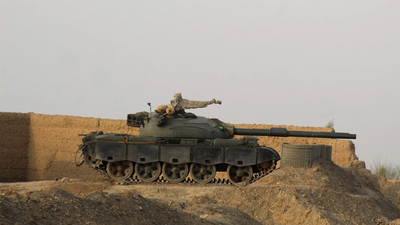
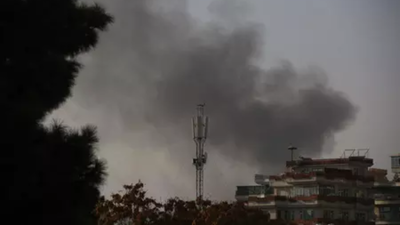
In a declared “open war,” Pakistan launched overnight airstrikes in Afghanistan, heavily bombing multiple key cities, including Kabul and Kandahar, and claiming that 133 people were killed in what Islamabad called a “strong and effective” retaliation for “unprovoked firing” from across the border.The strikes came after Afghanistan claimed it had killed 55 Pakistani troops earlier along the Durand Line, the contested border between the two neighbouring countries.The military escalation appeared to move both sides further away from the Qatar-brokered peace efforts between the two Islamic nations, casting uncertainty over the fragile understanding.Multiple explosions were heard in Kabul and Kandahar, with locals reporting jets flying overhead. Pakistan reportedly used its air force in the strikes, while Afghanistan, a landlocked country, does not have an air force of its own.The Associated Press reported that Pakistan’s military carried out airstrikes targeting Afghan military facilities in Kabul, Kandahar and Paktia provinces, allegedly destroying two brigade bases. However, there was no mention of potential casualties.Taliban’s ammunition facilities also fell in the radar of attack by Islamabad. Officials spoke on condition of anonymity to AP, as they were not authorised to speak to the media on the record.Afghanistan said its military launched crossborder attacks into Pakistan late Thursday in retaliation for deadly Pakistani airstrikes on Afghan border areas on Sunday. It claimed to have captured more than a dozen Pakistani army posts during the operation.Pakistan’s government, which had described Sunday’s airstrikes as targeting militants sheltered in the area, termed Thursday’s Afghan assault unprovoked and rejected claims that any army posts had been seized.Officials from both sides spoke on condition of anonymity, as they were not authorised to speak to the media on the record.UN secretary-general Antonio Guterres urged restraint, calling on both sides to protect civilians in accordance with international law and “to continue to seek to resolve any differences through diplomacy,” UN spokesperson Stephane Dujarric said.
Afghan strikes were retaliatory
“In response to the repeated rebellions and insurrections of the Pakistani military, large-scale offensive operations were launched against Pakistani military bases and military installations along the Durand Line,” Mujahid said in a post on X Thursday night. Afghanistan’s defense ministry said the retaliatory strikes took place along the border across six provinces.The 2,611-kilometre (1,622-mile) border between the two countries is known as the Durand Line, which Afghanistan has not formally recognised.
Differing casualty figures
The two sides presented sharply different casualty figures.Afghanistan’s defense ministry said 55 Pakistani soldiers were killed, with some bodies taken into Afghanistan, and that “several others were captured alive.” It reported eight Afghan soldiers killed and 11 wounded. The ministry said it destroyed 19 Pakistani army posts and two bases, adding that the fighting ended at midnight, around four hours after the assault began.Pakistan’s information minister Attaullah Tarar, however, said two Pakistani soldiers were killed and three others wounded. He said 36 Afghan fighters had been killed. In a post on X, he said Pakistan was giving a “strong and effective response” to what he described as unprovoked firing from Afghanistan.Mosharraf Ali Zaidi, spokesperson for Pakistan’s Prime Minister Shehbaz Sharif, denied that any Pakistani soldiers had been captured. Later, in another post on X, he said at least 133 Afghan fighters were killed and more than 200 wounded, claiming that 27 Afghan posts were destroyed and nine fighters captured. He did not specify where the casualties occurred, but added that there would be “many more casualties estimated in strikes in Kabul, Paktia and Kandahar military targets.”
Refugee camp hit
Both sides also reported exchanges of fire near the Torkham border crossing.Afghan authorities began evacuating a refugee camp near Torkham after several refugees were wounded, said Qureshi Badlon, head of Torkham’s Information and Public Awareness Board. The defense ministry said 13 civilians, including women and children, were injured in a missile strike on the camp.On the Pakistani side, police said residents were moving to safer areas. Afghan refugees waiting to cross back into Afghanistan were also relocated. Pakistan has been conducting a major crackdown on migrants since October 2023, expelling hundreds of thousands of people.Pakistani police said mortars fired from Afghanistan landed in nearby villages but reported no civilian casualties.“Pakistan will take all necessary measures to ensure its territorial integrity and the safety and security of its citizens,” Pakistan’s Information Ministry said in a post on X.Afghanistan’s military released video footage showing military vehicles moving at night accompanied by the sound of heavy gunfire. The footage could not be independently verified.
Months of tension
Tensions between the two neighbours have remained high for months. Deadly border clashes in October killed dozens of soldiers, civilians and suspected militants. The violence followed explosions in Kabul that Afghan officials blamed on Pakistan. In response, Islamabad carried out strikes deep inside Afghanistan targeting alleged militant hideouts.A Qatar-mediated ceasefire has largely held, but sporadic exchanges of fire have continued. Several rounds of peace talks in November failed to produce a formal agreement.On Sunday, Pakistan’s military conducted strikes along the Afghan border, claiming it killed at least 70 militants.Afghanistan rejected the claim, saying dozens of civilians, including women and children, were killed. The defence ministry said “various civilian areas” in eastern Afghanistan were hit, including a religious madrassa and several homes, calling the strikes a violation of Afghanistan’s airspace and sovereignty.Militant violence has surged in Pakistan in recent years, much of which Islamabad attributes to the Pakistani Taliban, or TTP, and outlawed Baloch separatist groups. The TTP, while separate from Afghanistan’s Taliban, is closely allied with it. Pakistan accuses the TTP of operating from Afghan territory, a charge denied by both the group and Kabul.