BlueBird Block-2 mission: Isro releases rare onboard camera footage from liftoff to satellite separation — Watch | India News
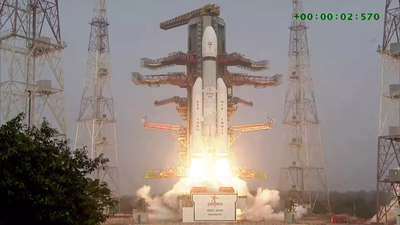
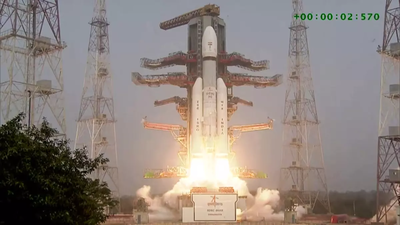
The Indian Space Research Organisation (Isro) on Wednesday released rare onboard camera footage from its heaviest rocket, LVM3-M6, offering a rocket’s-eye view of the BlueBird Block-2 mission from liftoff to satellite separation.The footage shared by Isro on X features visuals captured by cameras onboard and documents each major phase of the ascent. The footage shows the rocket lifting off from the second launch pad at the Satish Dhawan Space Centre in Sriharikota, Andhra Pradesh, followed by the separation of the twin S200 solid strap-on boosters. It then captures the separation of the L110 liquid core stage and the jettisoning of the payload fairing, before concluding with the successful separation of the BlueBird Block-2 satellite into Low Earth Orbit.The visuals were recorded during Isro’s successful commercial launch of the next-generation US communication satellite for AST SpaceMobile earlier in the day. The 6,100 kg satellite was placed into its intended orbit at an altitude of about 520 km, approximately 15 minutes after launch.The 43.5-metre-tall LVM3 lifted off at 8.55 am after the completion of a 24-hour countdown. Powered by two S200 solid boosters, a liquid core stage and a cryogenic upper stage, the rocket performed all mission events as planned.The space agency said the mission, designated LVM3-M6, marked the sixth operational flight of the LVM3 launch vehicle, nicknamed ‘Bahubali’ for its heavy-lift capability. The Isro chief, Dr V Narayanan, described the mission’s success as a “season’s gift” to the country.BlueBird Block-2 is part of a Low Earth Orbit constellation being developed by US-based AST SpaceMobile. The satellite is designed to enable direct-to-mobile connectivity, providing 4G and 5G voice and video calls, text messaging, streaming and data services directly to standard mobile smartphones.Developed by Isro, the three-stage LVM3 has a lift-off mass of 640 tonnes and a payload capability of 4,200 kg to Geosynchronous Transfer Orbit. In earlier missions, it has successfully launched Chandrayaan-2, Chandrayaan-3 and two OneWeb missions carrying 72 satellites.