
India, US reach interim trade pact framework: What’s in the deal
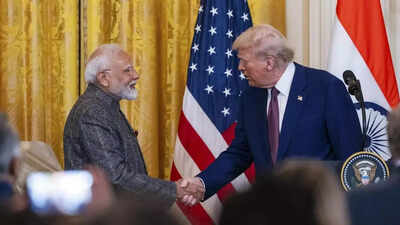
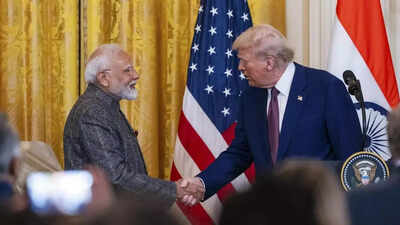
India and the United States have reached a framework for an interim agreement on reciprocal and mutually beneficial trade, according to a joint statement issued by the White House early Saturday.The framework reaffirms both partners’ commitment to broader India–US bilateral trade agreement (BTA) negotiations, which were launched by Prime Minister Narendra Modi and US President Donald Trump in February 2025.Washington said it would take into account India’s request for further cuts in tariffs on Indian goods as negotiations progress.The agreement comes days after India and the US reached a meaningful breakthrough on a trade deal, following nearly a year of trade tensions between the two countries. The tensions began when Trump imposed tariffs on Indian goods and later doubled them to 50 per cent as a penalty over New Delhi’s purchase of Russian oil.On Saturday, Trump also signed an executive order lifting the punitive additional 25 per cent tariff imposed on India over its Russian oil imports.
Key terms of the interim agreement between the United States and India:
- Under the framework, India has agreed to eliminate or significantly reduce tariffs on all US industrial goods and a broad range of American food and agricultural products. These include dried distillers’ grains (DDGs), red sorghum used for animal feed, tree nuts, fresh and processed fruits, soybean oil, as well as wine and spirits.
- The United States, in turn, will apply a reciprocal tariff rate of 18 per cent on Indian-origin goods under an executive order governing
reciprocal trade practices . These goods include textiles and apparel, leather and footwear, plastics and rubber, organic chemicals, home décor, artisanal products and certain categories of machinery. Subject to the successful conclusion of the interim agreement, Washington will also remove reciprocal tariffs on a wide range of Indian exports, including generic pharmaceuticals, gems and diamonds, and aircraft parts.
- The White House said the US will additionally lift tariffs on certain aircraft and aircraft parts from India that were imposed earlier on national security grounds under separate proclamations covering aluminium, steel and copper imports. India, meanwhile, will receive a preferential tariff rate quota for automotive parts exported to the US, in line with American national security requirements. Negotiated outcomes on generic pharmaceuticals and pharmaceutical ingredients will be contingent on the findings of an ongoing US investigation.
- Both countries have committed to providing each other with sustained preferential market access in sectors of mutual interest. They also agreed to establish rules of origin to ensure that the benefits of the agreement primarily accrue to India and the United States.
- Addressing non-tariff barriers will be a key focus of the interim pact. India has agreed to tackle long-standing issues affecting US medical devices, remove restrictive import licensing procedures for information and communication technology (ICT) goods, and review within six months whether US-developed or international standards and testing requirements can be accepted for American exports into the Indian market in identified sectors. India will also work to resolve long-standing barriers affecting US food and agricultural exports.
- To improve regulatory cooperation, the two sides said they intend to hold discussions on standards and conformity assessment procedures in mutually agreed sectors to ease compliance with technical regulations.
- The statement added that if either country changes its agreed tariff levels in the future, the other side will have the right to modify its commitments accordingly.
- The United States and India will work to further expand market access through negotiations under the Bilateral Trade Agreement (BTA), the White House said. Washington also indicated that it would consider India’s request for further reductions in tariffs on Indian goods during the course of the talks.
- Both sides agreed to strengthen alignment on economic security to improve supply chain resilience and boost innovation. This will include coordinated steps to counter non-market policies of third countries, as well as closer cooperation on inbound and outbound investment screening and export controls.
- India has indicated its intention to purchase goods worth $500 billion from the United States over the next five years. These purchases are expected to include US energy products, aircraft and aircraft parts, precious metals, technology products and coking coal. The two countries also plan to significantly expand trade in technology products such as graphics processing units (GPUs) and other equipment used in data centres, alongside deeper joint cooperation in critical technologies.
- The US and India also committed to addressing discriminatory or burdensome practices affecting digital trade and to charting a clear path towards robust, ambitious and mutually beneficial digital trade rules as part of the BTA.
According to the statement, both countries will move swiftly to implement the agreed framework and work towards finalising the interim agreement, with the goal of concluding a comprehensive and mutually beneficial BTA in line with the agreed roadmap.