It’s wrong to conclude that the mining is permitted in all landforms below 100 metres height, no relaxation made at all in the Aravali: Yadav | India News
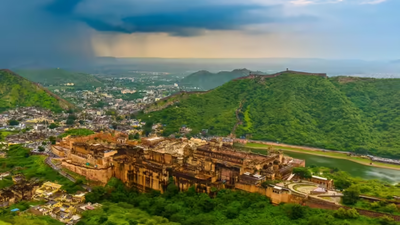
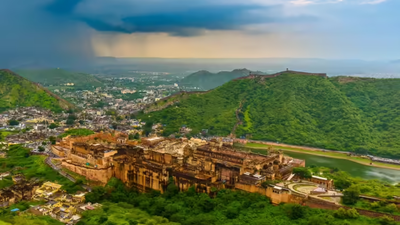
NEW DELHI: Amid concerns expressed in certain quarters over the possibility of expansion of mining activities in the Aravali Hills and Ranges in the wake of its new uniform definition, Union environment minister Bhupender Yadav on Sunday said it was absolutely wrong to conclude that the mining is permitted in all landforms below 100 metres height as there has been no relaxation made at all in the Aravali.“Only 0.19% of the total 1.44 lakh sq km area of Aravali can be eligible for mining. The rest of the Aravali is protected and secure,” he posted on X. The Aravalli Hills and Ranges are among India’s oldest geological formations, stretching from Delhi through Haryana, Rajasthan, and into Gujarat. Only a very small area is under permitted mining leases and out of this small percentage, nearly 90 % of the mining activity is confined to Rajasthan, followed by about 9% in Gujarat and about 1% in Haryana. No mining activity is permitted in Delhi.
Yaav said the Aravali range has been explained as all the landforms which exist within 500 metre of two adjoining hills of height of 100 metres or more. All landforms existing within this 500 metre zone irrespective of their height and slopes are excluded for the purposes of grant of mining lease, said the minister.He also clarified the issue in detail in response to a media query on the sidelines of the National Tiger Conservation Authority’s meeting at Unesco World Heritage Site Sundarbans. The question pertained to the recent Supreme Court’s acceptance of uniform policy level definition of Aravali Hills and Ranges specifically in the context of regulating mining.Yadav, however, emphasised that all the landforms enclosed within the lowest binding contour encircling Hills of height 100 metre or more irrespective of their height and slopes are excluded for the purposes of grant of mining lease.The Opposition parties had raised the issue in the Parliament during the concluded winter session, claiming that the definition would exclude most of the Aravali range from protection. In the wake of the SC’s Nov order of accepting the Centre-backed definition, Congress general secretary and former environment minister Jairam Ramesh called the move a severe blow to the Aravali ecosystem.“The Aravalli Hills extend from Delhi through Haryana and Rajasthan to Gujarat. Over the years they have been devastated by mining, construction, and other activities in violation of all regulations and laws. Now it appears that this sensitive and sprawling ecosystem will be subject to another severe blow,” Ramesh had posted on X.Referring to media reports, he had said, “This definition is meant to restrict mining but in reality will mean that 90% of the Aravalli Hills will not be counted as Aravalli any more. Evidently, the Supreme Court has accepted this revised definition. This is bizarre and will have very grave environmental and public health consequences. It calls for an immediate review.”Former Rajasthan chief minister Ashok Gehlot too opened a front against the SC recent move, blaming the Centre for pitching for that uniform definition. Yadav on Sunday, however, appealed to everyone to “stop spreading confusion” and even explained how the Rajasthan government has been following the definition since 2006.His ministry also explained that all Aravali range states/UT during deliberations agreed to adopt the uniform criterion of “100 metres above local relief” for regulating mining in the Aravalli region as had been in force in Rajasthan while unanimously agreeing to make it more objective and transparent.“All the landforms enclosed within the lowest binding contour encircling Hills of height 100 metre or more irrespective of their height and slopes are excluded for the purposes of grant of mining lease. Similarly, Aravali range has been explained as all the landforms which exist within 500 metres of two adjoining Hills of height 100 metre or more. All landforms existing within this 500 metre zone irrespective of their height and slopes are excluded for the purposes of grant of mining lease,” the ministry clarified.By defining Aravalli Hills as any landform rising 100 metres or more above local relief, along with their supporting slopes, the entire ecological unit is protected. This prevents piecemeal exploitation of slopes or foothills that are vital for soil stability, water recharge, and vegetation cover.”